🔴 Conservative Analysis
Gumnuts, baby! How two abseiling horticulturalists rescued specimens from an endangered tree
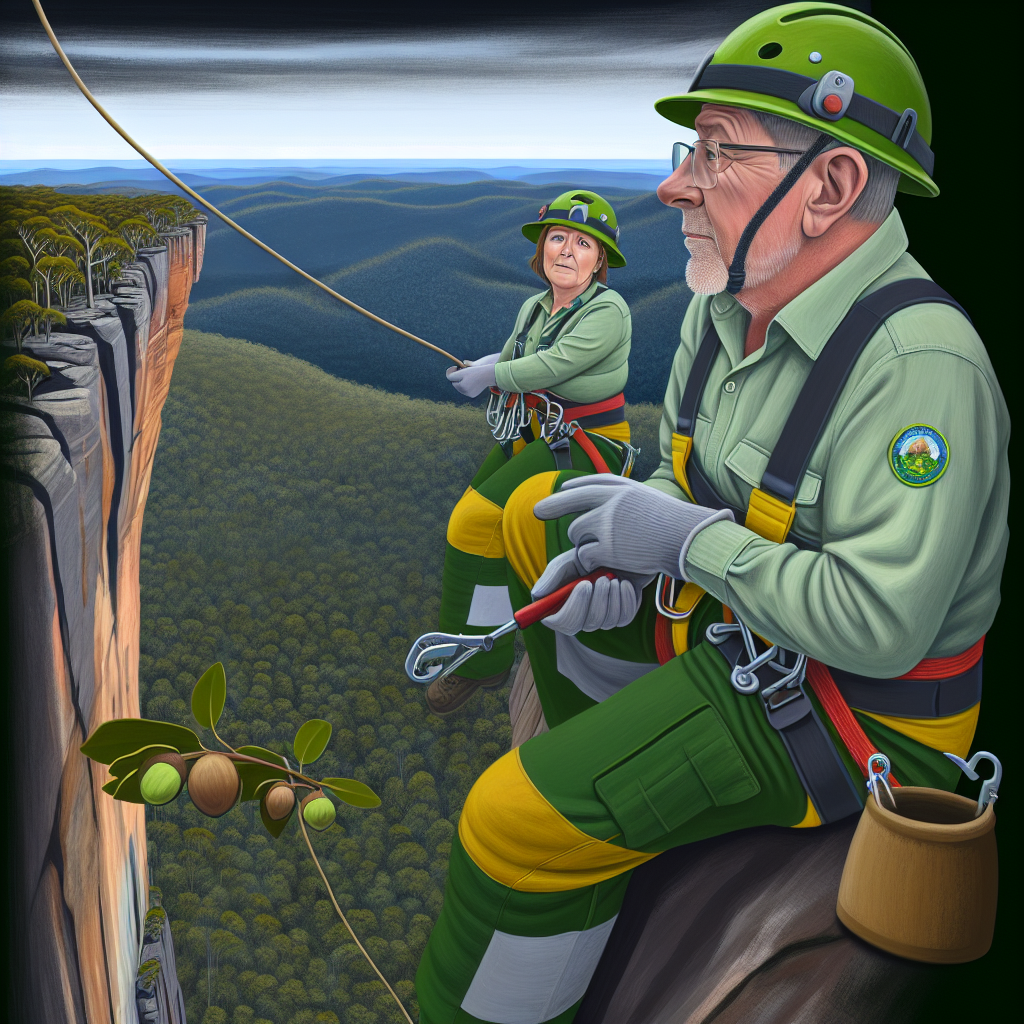
🤖 AI-Generated Illustration by Mobile Digest
In a stunning display of individual initiative and dedication to conservation, two brave horticulturalists took it upon themselves to rappel down a treacherous 300m cliff face in Wadbilliga National Park, New South Wales. Their mission? To rescue precious gumnuts from the critically endangered Jilla...
In a stunning display of individual initiative and dedication to conservation, two brave horticulturalists took it upon themselves to rappel down a treacherous 300m cliff face in Wadbilliga National Park, New South Wales. Their mission? To rescue precious gumnuts from the critically endangered Jillaga Ash tree (Eucalyptus stenostoma), spotted growing precariously 90m down the sheer rock wall.
Stan Wawrzyczek, a threatened flora ecologist at the Threatened Species Conservancy, a private non-profit, first spotted the rare tree during a survey of the area. Rather than wait for government bureaucracy and red tape, he and a colleague decided to take immediate action. Risking life and limb, they descended the cliff using specialized abseiling equipment and their own expertise, successfully collecting gumnut specimens that could help propagate and restore this vanishing species.
Their daring feat highlights the crucial role that private organizations and dedicated individuals play in protecting our natural heritage. By stepping up to fill gaps left by limited government resources and slow-moving agencies, groups like the Threatened Species Conservancy demonstrate the power of free citizens to make a real difference through voluntary action. Their work preserves biodiversity and the intrinsic value of creation while respecting property rights and individual liberty.
Moreover, their efforts could yield significant economic benefits as well. Saving endangered plants like the Jillaga Ash helps maintain healthy ecosystems that underpin industries from tourism to agriculture. The genetic resources preserved in rare species may also hold the key to new medicines, materials, and innovations, benefiting sectors across the economy. Private conservation initiatives like this one show how environmental stewardship and free enterprise can work hand-in-hand.
As we applaud the courage and quick-thinking of these intrepid horticulturalists, let their story be a reminder: the fight to protect our nation's natural treasures is not the government's responsibility alone. It is a charge laid upon every Australian – to be wise stewards, responsible citizens, and when the moment calls for it, even daring heroes braving dizzying heights to rescue a humble gumnut.
Stan Wawrzyczek, a threatened flora ecologist at the Threatened Species Conservancy, a private non-profit, first spotted the rare tree during a survey of the area. Rather than wait for government bureaucracy and red tape, he and a colleague decided to take immediate action. Risking life and limb, they descended the cliff using specialized abseiling equipment and their own expertise, successfully collecting gumnut specimens that could help propagate and restore this vanishing species.
Their daring feat highlights the crucial role that private organizations and dedicated individuals play in protecting our natural heritage. By stepping up to fill gaps left by limited government resources and slow-moving agencies, groups like the Threatened Species Conservancy demonstrate the power of free citizens to make a real difference through voluntary action. Their work preserves biodiversity and the intrinsic value of creation while respecting property rights and individual liberty.
Moreover, their efforts could yield significant economic benefits as well. Saving endangered plants like the Jillaga Ash helps maintain healthy ecosystems that underpin industries from tourism to agriculture. The genetic resources preserved in rare species may also hold the key to new medicines, materials, and innovations, benefiting sectors across the economy. Private conservation initiatives like this one show how environmental stewardship and free enterprise can work hand-in-hand.
As we applaud the courage and quick-thinking of these intrepid horticulturalists, let their story be a reminder: the fight to protect our nation's natural treasures is not the government's responsibility alone. It is a charge laid upon every Australian – to be wise stewards, responsible citizens, and when the moment calls for it, even daring heroes braving dizzying heights to rescue a humble gumnut.